Vegetable Plant Spacing Chart & Planner
Recommended plant distances, row widths, planting depths, and expected harvests for over 30 popular vegetables. Use the interactive bed planner below to design your garden layout.
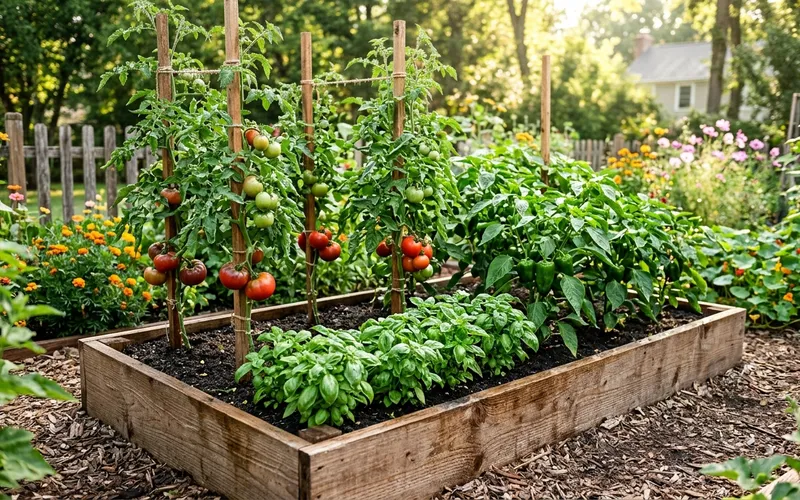
Vegetable Space Planner
Planting Schedule by Climate Zone
Planting at the right time is just as important as good spacing. Cool-weather greens planted in hot summer sun will bolt and turn bitter, while heat-loving vegetables rot if planted in cold, wet spring soil. Select your USDA growing zone above to see recommended outdoor planting dates:
Direct sow cold-tolerant crops once the soil reaches 40°F (4°C): spinach, radishes, peas, and green onions. Plant seeds shallow to catch warm spring sun.
Transplant warm-season crops once nights stay above 50°F (10°C) and the soil is warm: tomatoes, peppers, eggplants, squash, and sweet corn.
Clear spent spring greens and sow autumn cabbage-family crops: kale, broccoli, carrots, and winter head lettuce. Harvest continues well past light autumn frosts.
Vegetable Spacing & Plant Problem Troubleshooter
Incorrect spacing is a major cause of common garden problems. Select a symptom below to see what causes it and how adjusting your spacing fixes it:
When crowded leaves touch, morning moisture stays trapped for hours. Mold and mildew thrive quickly in damp, still air.
4 Steps to Planting a Healthy Vegetable Bed
Prepare the Soil
Loosen soil 10 to 12 inches deep and mix in 2 inches of compost. Avoid stepping on the bed so the soil stays light and loose for young roots.
Mark Straight Rows
Push stakes into the ground at each end of the row and stretch string between them. Use a tape measure to mark your planting spots along the line.
Dig Holes & Plant
Dig holes twice as wide as the seedling root ball. Plant greens and cabbage-family crops level with the soil; bury tall tomato stems deep so they grow extra roots.
Water & Mulch
Lay a soaker hose or drip line along the row. Cover open soil with 2 inches of clean straw or shredded leaves to keep moisture in and block weeds.
Estimate Compost, Mulch & Water Hose for Your Bed
Standard 4-foot garden beds easily fit 2 to 3 lines of soaker tubing. Adding a 2-inch layer of rich compost every spring feeds vegetables naturally and keeps the soil healthy.
Quick Plant Spacing & Density Chart
Recommended spacing for vegetables, flowers, perennials, and hedge shrubs based on university agricultural research. Search by plant name or filter by type.
| Plant | Space Between Plants | Space Between Rows | Best Layout | Source | Plan It |
|---|---|---|---|---|---|
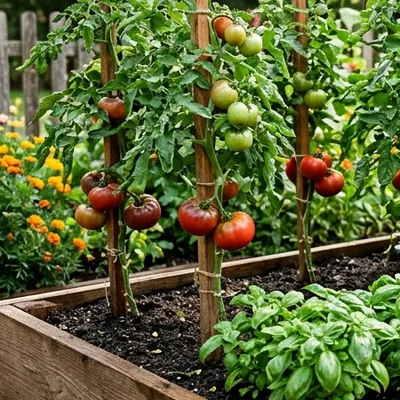 Bush Tomato Staked or Caged Bed | 18" (15–24") | 36" (30–42") | 18–24 in | University of Minnesota Extension↗ | |
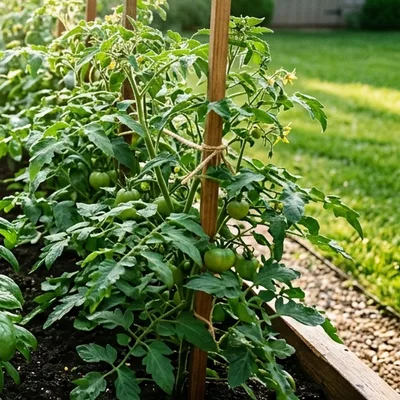 Climbing Tomato Trellis or Large Cage | 24" (18–36") | 42" (36–48") | 24–36 in | University of Minnesota Extension↗ | |
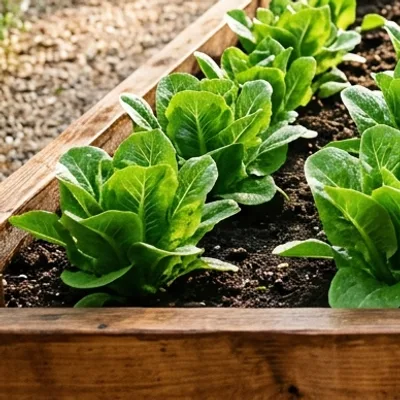 Head Lettuce (Romaine / Crisphead) Garden Bed | 12" (10–14") | 12" (12–18") | 10–12 in | University of Minnesota Extension↗ | |
 Carrots (Garden Bed) Raised Bed | 3" (2–4") | 3" (3–12") | 3–4 in | University of Minnesota Extension↗ | |
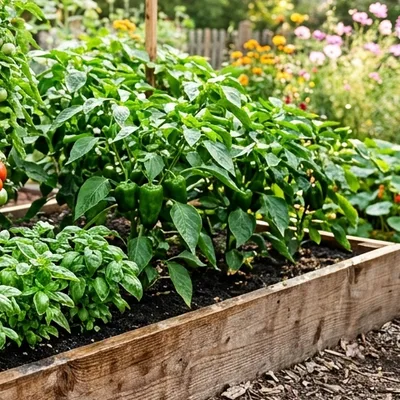 Bell & Sweet Pepper Garden Bed or Rows | 18" (14–24") | 18" (18–30") | 16–20 in | UF/IFAS Extension↗ | |
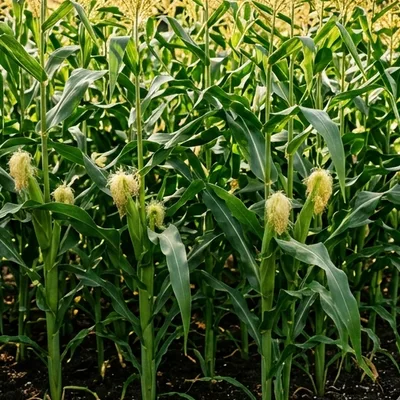 Sweet Corn Block Rows for Wind Pollination | 9" (8–12") | 30" (24–36") | 12–15 in | University of Minnesota Extension↗ | |
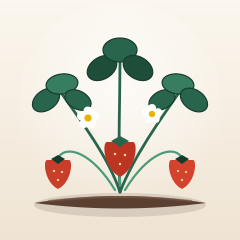 Strawberry (Garden Bed) Raised Bed | 12" (10–14") | 12" (12–18") | 12–14 in | University of Minnesota Extension↗ |
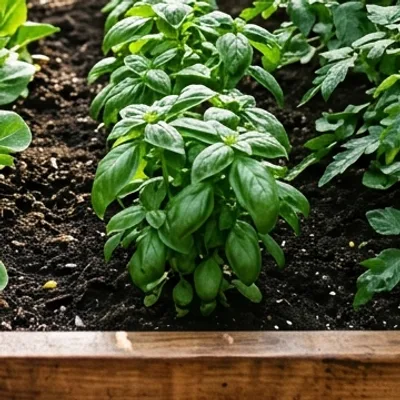




Vegetable Plant Spacing
Bush tomatoes and compact vegetables can be planted closer together than large climbing varieties. Raised beds let you plant closer because you don't need wide walking paths between every row.
Herbs, Flowers, and Perennials
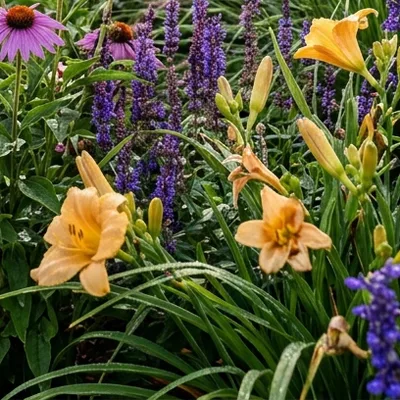
Space perennial flowers by their full-grown width so leaves gently touch once mature. This keeps weeds down while letting fresh air circulate.
Groundcovers and Low Shrubs
Groundcover starter plugs planted in a zigzag pattern fill in to form a dense green carpet faster than straight rows.
Hedges and Fruit Trees
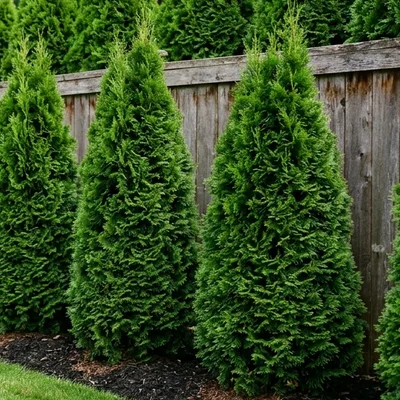
Hedge spacing depends on how fast you want a solid privacy screen. Fruit tree spacing depends mainly on the tree size (dwarf, semi-dwarf, or standard).
How Garden Spacing and Harvests Are Calculated
1. Plants per Row Calculation
Using your bed width, bed length, plant spacing, and row spacing (after leaving room along the edges):
2. Total Harvest Calculation
Expected garden harvest based on average crop per plant:
Vegetable Plant Spacing & Harvest Planning FAQs
Why does vegetable plant spacing differ between raised beds and in-ground rows?+
Raised beds hold loose, fluffy soil that nobody walks on. That lets roots grow deeper instead of spreading far sideways, so you can plant vegetables 25% to 40% closer together in zigzag beds than in open garden rows—where wide 24-to-36-inch walking paths are needed for feet, tools, and tillers.
What happens if vegetables are planted too close together?+
Crowded plants block sunlight from each other, forcing stems to grow tall, weak, and spindly. Poor airflow traps damp air between leaves, leading to leaf spots, powdery mildew, and blight. In addition, crowded roots fight over water and nutrients, resulting in smaller vegetables and lower total harvests.
How do I calculate how many vegetables fit per square foot or meter?+
For straight rows, multiply plant spacing by row spacing to get the ground area each plant needs in square inches. Then divide 144 by that number to find plants per square foot. In Square Foot Gardening (SFG), crops simply go 1, 4, 9, or 16 plants inside each 12×12 inch square.
Which vegetables should never be planted next to each other?+
Avoid planting closely related summer crops (tomatoes, peppers, eggplants, and potatoes) right next to each other because they share the same pests and blights. Also keep onions and garlic away from beans and peas, as onion roots can slow down the helpful soil bacteria that peas and beans rely on.
Explore Related Calculators
Raised Bed Spacing
Bed presets (4×8, 4×4, 2×4) with safe edge room from wooden walls.
Zigzag & Triangular Spacing
Compare zigzag triangle rows vs. straight rows and see which fits more.
Square Foot Gardening
Easy 1×1 ft grid planner for 1, 4, 9, and 16 plants per square.
Plant Row Spacing
Set plant-to-plant space and row distance with walking path room.
Hedge Spacing
Single straight rows or double zigzag hedges with fence gaps.
Circular Bed Spacing
Round garden beds with neat rings around a centerpiece plant.