Fruit Tree Spacing Chart & Orchard Planner
Find the right planting distances for apple, pear, peach, cherry, plum, and citrus trees. Learn dwarf tree spacing, pollinator pairs, and mower lane clearance.
Fruit Tree & Orchard Planner
Bloom Timing & Best Tree Pairs for Fruit
Fruit trees that need a partner tree (cross-pollination) must bloom at the same time so bees can carry pollen between them. Keep companion trees within 50 to 100 feet of each other:
Blooms in mid-spring. Gravenstein's pollen does not work for other trees, so plant it alongside two other fruiting partner varieties (like Gala + Pink Lady) to produce lots of fruit.
Orchard workhorses. Golden Delicious and white-flowering crabapples bloom over a long 2-week window, pollinating both early and late varieties.
Late bloomers wake up up to 3 weeks after early varieties, protecting their delicate blossoms from late spring freezes in cold regions.
Orchard Crowding & Sun Problems
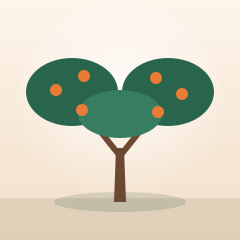
When fruit trees are planted too closely or allowed to grow wide and bushy at the top, upper branches cast heavy shade below. Shaded lower branches cannot get enough sunlight to set fruit buds, leaving the bottom half of the tree bare.
4 Steps to Plant a Bare-Root Fruit Tree
Choose High Ground
Plant on high ground or gentle slopes where cold air drains away on chilly spring nights. Avoid low dips in the yard where late frosts freeze delicate blossoms.
Dig a Wide, Shallow Hole
Dig a hole twice as wide as the roots, but only as deep as the root system. Do not add rich potting soil directly into the hole—backfill with original garden soil so roots spread out naturally.
Keep Graft Bump Above Soil
Make sure the swollen graft bump sits 2 to 3 inches above the dirt. This keeps the dwarf roots working properly so the tree stays compact and prevents trunk rot.
Add a Stake & Trunk Guard
Stake dwarf trees so wind does not tip them over while their roots take hold. Wrap wire mesh around the bottom 18 inches of the trunk to protect the bark from hungry rabbits and mice.
Quick Plant Spacing & Density Chart
Recommended spacing for vegetables, flowers, perennials, and hedge shrubs based on university agricultural research. Search by plant name or filter by type.
| Plant | Space Between Plants | Space Between Rows | Best Layout | Source | Plan It |
|---|---|---|---|---|---|
Dwarf Apple Tree Trellised Fruit Row | 48" (36–60") | 144" (120–168") | 4–6 ft | eXtension Apple Rootstock Consortium↗ | |
Semi-Dwarf Apple Tree Backyard Orchard | 180" (144–216") | 240" (216–288") | 12–15 ft | Penn State Extension↗ | |
 Apple Tree (Full-Size Standard) Traditional Homestead Orchard | 300" (240–360") | 360" (300–420") | 20–25 ft | University of Maine Cooperative Extension↗ | |
Peach & Nectarine Tree Open-Center (Bowl Shape) Orchard | 216" (180–240") | 240" (216–288") | 15–18 ft | Clemson University Cooperative Extension↗ | |
 Sweet Cherry Tree Backyard Cherry Tree | 168" (120–216") | 216" (180–264") | 10–14 ft | Washington State University Tree Fruit Extension↗ |
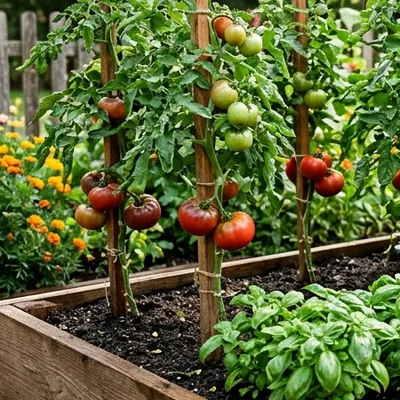
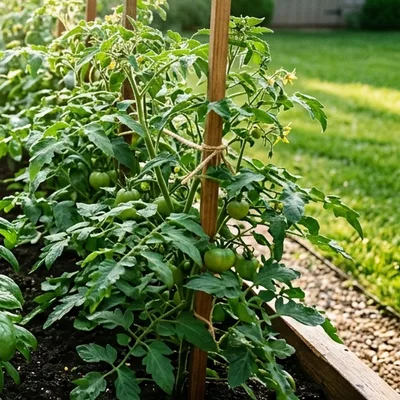
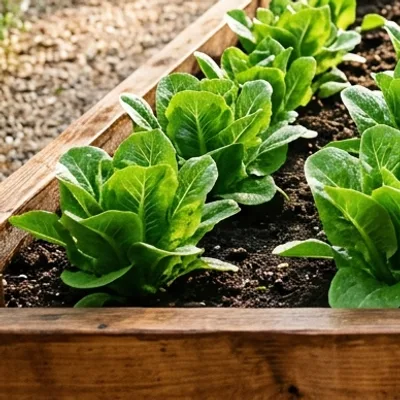



Vegetable Plant Spacing
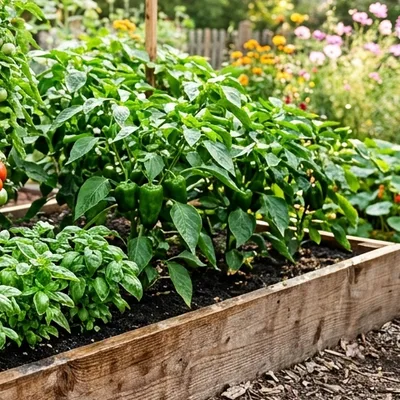
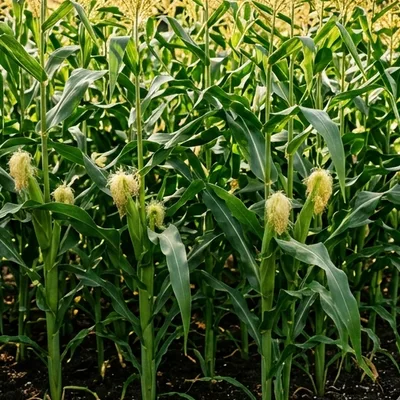
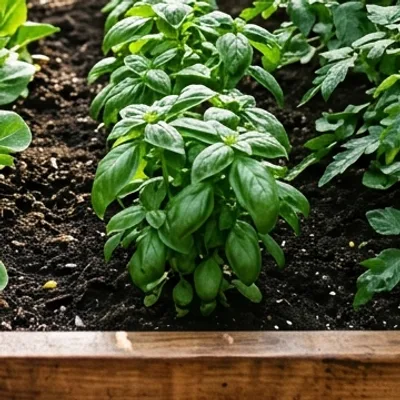
Bush tomatoes and compact vegetables can be planted closer together than large climbing varieties. Raised beds let you plant closer because you don't need wide walking paths between every row.
Herbs, Flowers, and Perennials
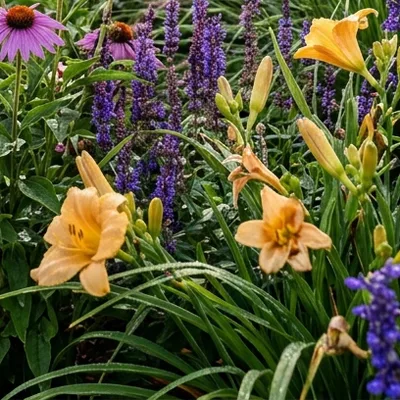
Space perennial flowers by their full-grown width so leaves gently touch once mature. This keeps weeds down while letting fresh air circulate.
Groundcovers and Low Shrubs
Groundcover starter plugs planted in a zigzag pattern fill in to form a dense green carpet faster than straight rows.
Hedges and Fruit Trees
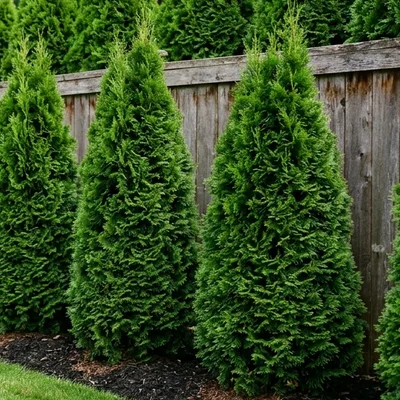
Hedge spacing depends on how fast you want a solid privacy screen. Fruit tree spacing depends mainly on the tree size (dwarf, semi-dwarf, or standard).
How to Calculate Tree Counts & Pathway Widths
1. Trees Per Acre Calculation
Enter your spacing between trees and row width in feet:
For tight dwarf rows (3 ft × 12 ft): 43,560 ÷ 36 = 1,210 trees/acre.
2. Mower & Pathway Clearance
Open lane left between rows once trees reach full spread:
Leave enough open space for your mower or cart to pass easily (typically 4.5 to 6.0 ft).
Fruit Tree Spacing & Orchard Design FAQs
How far apart should dwarf, semi-dwarf, and standard fruit trees be planted?+
Dwarf fruit trees should be planted 8 to 10 feet apart with 14 to 16 feet between rows. Semi-dwarf trees need 14 to 18 feet between trees with 18 to 22 feet between rows. Full-size standard trees need 25 to 30 feet in all directions so they do not shade each other out and you have plenty of room for harvesting ladders.
Why do most apple, pear, and sweet cherry trees need a second tree for pollination?+
Most apples, pears, and sweet cherries cannot pollinate themselves or trees of the exact same variety. You need at least two different varieties that bloom at the same time planted within 50 to 100 feet of each other so bees can carry pollen between them to produce fruit.
How wide should the pathway between tree rows be?+
Leave enough space for your riding mower, wheelbarrow, or garden cart plus room for tree branches to spread. For dwarf trees (which grow about 8 to 10 feet tall), rows should be at least 14 feet apart. This ensures lower branches get plenty of sunlight and will not get damaged by passing wheels.
Can I plant fruit trees closer together along a trellis or fence?+
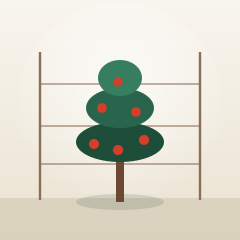
Yes! Dwarf trees can be planted 3 to 4 feet apart along a wire trellis or sturdy fence. By tying branches horizontally and trimming upright shoots each year, you can grow lots of fruit in small backyard spaces and harvest full crops within 2 to 3 years.
Explore Related Calculators
Raised Bed Spacing
Bed presets (4×8, 4×4, 2×4) with safe edge room from wooden walls.
Zigzag & Triangular Spacing
Compare zigzag triangle rows vs. straight rows and see which fits more.
Square Foot Gardening
Easy 1×1 ft grid planner for 1, 4, 9, and 16 plants per square.
Plant Row Spacing
Set plant-to-plant space and row distance with walking path room.
Hedge Spacing
Single straight rows or double zigzag hedges with fence gaps.
Circular Bed Spacing
Round garden beds with neat rings around a centerpiece plant.