Plant Spacing Reference Charts & Guides
Browse trusted spacing recommendations based on university garden research. Choose a category below for dedicated calculators and height/bloom planners, or filter the complete 20-crop guide right here.
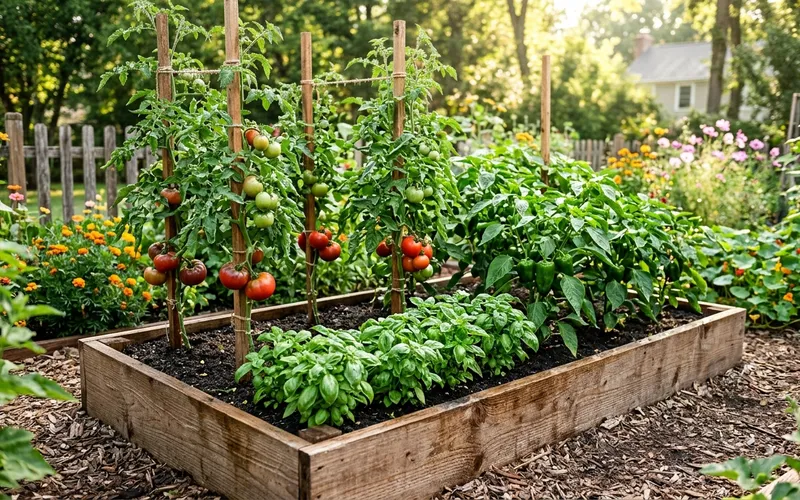
Vegetable Crops
Plant and row spacing for tomatoes, peppers, sweet corn, greens, and root crops with estimated harvest amounts.

 Orchard & Fruit
Fruit Trees & Orchards
Open →Spacing rules for dwarf, semi-dwarf, and full-size fruit trees, including walking paths and pollination pairings.
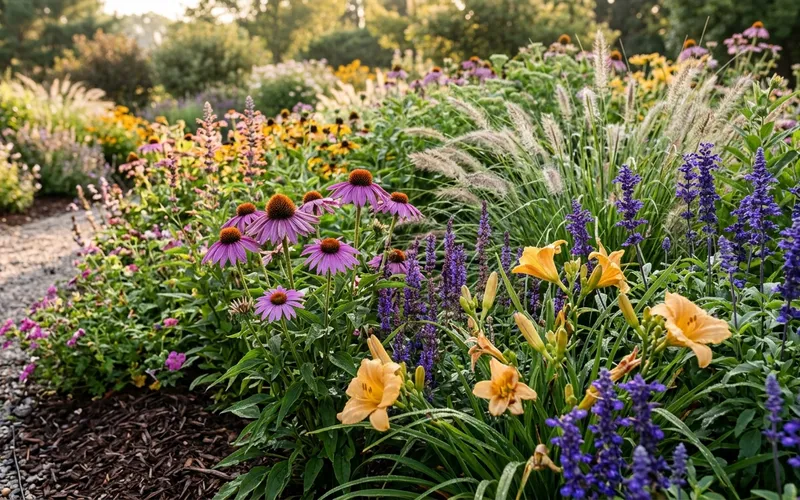
Flowers & Perennials
Flower bed and border layouts, arranging plants by height, planting in natural clusters, and dividing perennials.
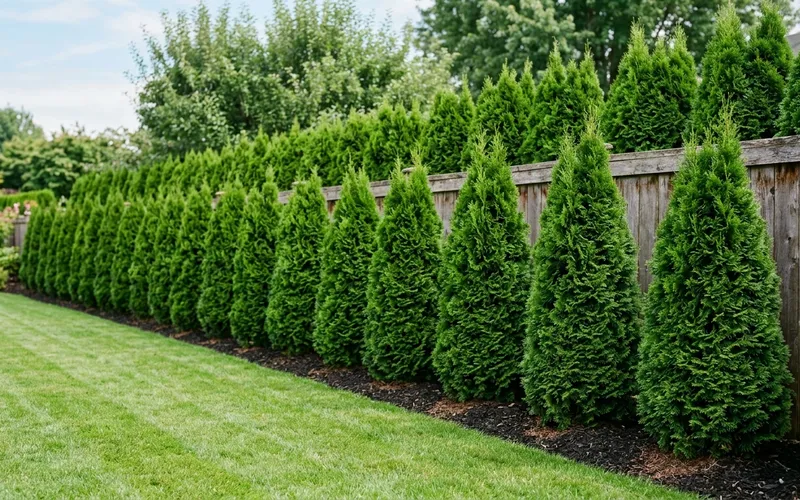
Groundcovers & Hedges
Plug and nursery tray counts, whole-tray rounding, single and zigzag hedges, and hillside coverage.
Quick Plant Spacing & Density Chart
Recommended spacing for vegetables, flowers, perennials, and hedge shrubs based on university agricultural research. Search by plant name or filter by type.
| Plant | Space Between Plants | Space Between Rows | Best Layout | Source | Plan It |
|---|---|---|---|---|---|
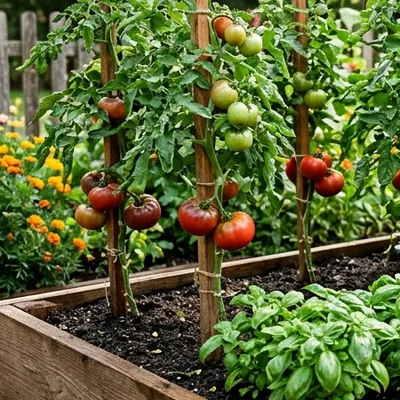 Bush Tomato Staked or Caged Bed | 18" (15–24") | 36" (30–42") | 18–24 in | University of Minnesota Extension↗ | |
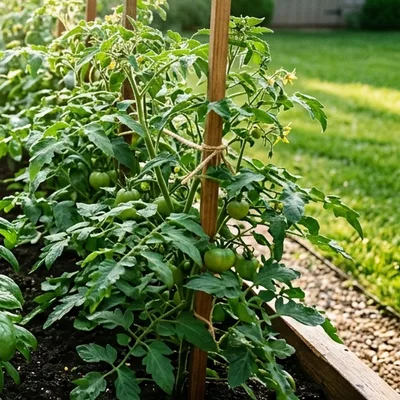 Climbing Tomato Trellis or Large Cage | 24" (18–36") | 42" (36–48") | 24–36 in | University of Minnesota Extension↗ | |
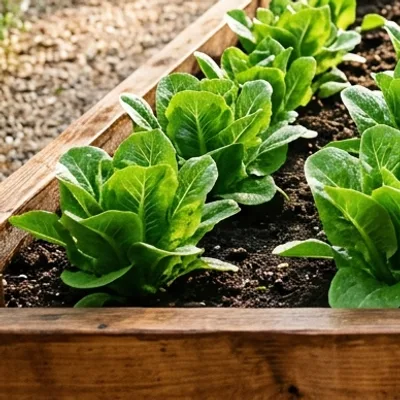 Head Lettuce (Romaine / Crisphead) Garden Bed | 12" (10–14") | 12" (12–18") | 10–12 in | University of Minnesota Extension↗ | |
 Carrots (Garden Bed) Raised Bed | 3" (2–4") | 3" (3–12") | 3–4 in | University of Minnesota Extension↗ | |
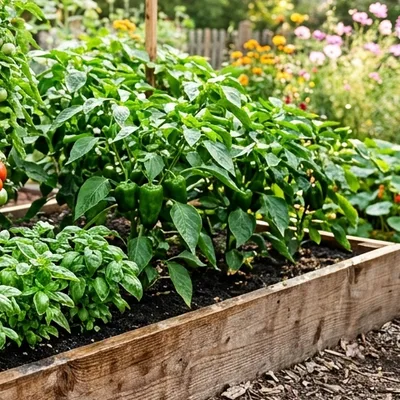 Bell & Sweet Pepper Garden Bed or Rows | 18" (14–24") | 18" (18–30") | 16–20 in | UF/IFAS Extension↗ | |
 Sweet Corn Block Rows for Wind Pollination | 9" (8–12") | 30" (24–36") | 12–15 in | University of Minnesota Extension↗ | |
 Strawberry (Garden Bed) Raised Bed | 12" (10–14") | 12" (12–18") | 12–14 in | University of Minnesota Extension↗ | |
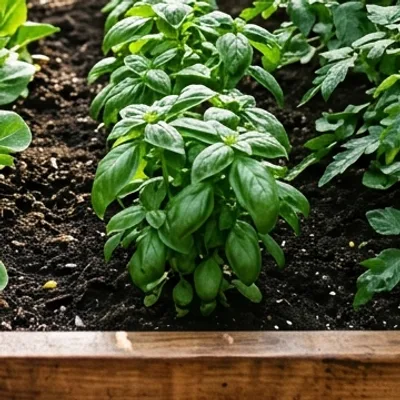 Sweet Basil Herb Bed / Garden Row | 10" (8–12") | 12" (10–18") | 10–14 in | University of Maryland Extension↗ | |
 Creeping Thyme Zigzag Groundcover Plugs | 12" (8–15") | 12" (8–15") | 12–18 in | University of Illinois Extension↗ | |
 Hosta (Medium Shade Plant) Shade Garden Bed | 24" (18–30") | 24" (18–30") | 24–32 in | University of Illinois Extension↗ | |
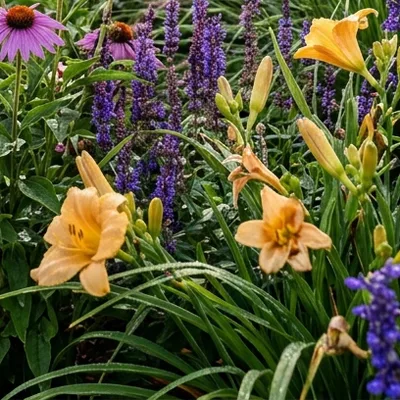 Daylily (Landscape Flower) Flowering Border Bed | 18" (15–24") | 18" (15–24") | 18–24 in | University of Illinois Extension↗ | |
 Boxwood (Low Edging Hedge) Clipped Low Hedge | 12" (10–15") | 15" (12–18") | 18–24 in | Royal Horticultural Society (RHS)↗ | |
 Boxwood (Tall Privacy Hedge) Formal Boundary Hedge | 24" (18–30") | 30" (24–36") | 36–48 in | Royal Horticultural Society (RHS)↗ | |
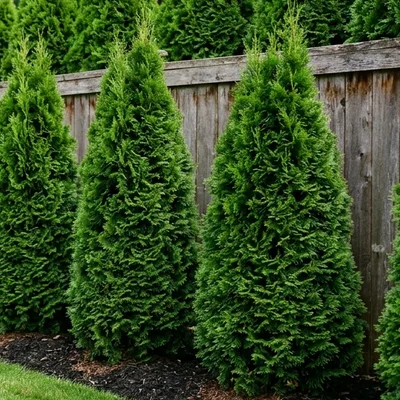 Arborvitae 'Emerald Green' Privacy Screen Row | 36" (30–48") | 42" (36–60") | 36–48 in | Royal Horticultural Society (RHS)↗ | |
 Arborvitae 'Green Giant' Fast-Growing Windbreak & Screen | 72" (60–96") | 120" (96–144") | 12–18 ft | North Carolina State Extension↗ | |
Dwarf Apple Tree Trellised Fruit Row | 48" (36–60") | 144" (120–168") | 4–6 ft | eXtension Apple Rootstock Consortium↗ | |
Semi-Dwarf Apple Tree Backyard Orchard | 180" (144–216") | 240" (216–288") | 12–15 ft | Penn State Extension↗ | |
 Apple Tree (Full-Size Standard) Traditional Homestead Orchard | 300" (240–360") | 360" (300–420") | 20–25 ft | University of Maine Cooperative Extension↗ | |
Peach & Nectarine Tree Open-Center (Bowl Shape) Orchard | 216" (180–240") | 240" (216–288") | 15–18 ft | Clemson University Cooperative Extension↗ | |
 Sweet Cherry Tree Backyard Cherry Tree | 168" (120–216") | 216" (180–264") | 10–14 ft | Washington State University Tree Fruit Extension↗ |
Vegetable Plant Spacing
Bush tomatoes and compact vegetables can be planted closer together than large climbing varieties. Raised beds let you plant closer because you don't need wide walking paths between every row.
Herbs, Flowers, and Perennials
Space perennial flowers by their full-grown width so leaves gently touch once mature. This keeps weeds down while letting fresh air circulate.
Groundcovers and Low Shrubs
Groundcover starter plugs planted in a zigzag pattern fill in to form a dense green carpet faster than straight rows.
Hedges and Fruit Trees
Hedge spacing depends on how fast you want a solid privacy screen. Fruit tree spacing depends mainly on the tree size (dwarf, semi-dwarf, or standard).
The 4 Golden Rules of Garden Spacing
Full-Grown Width Sets Spacing
Never space plants closer than half their full-grown width unless growing baby greens or trellised vines. Crowding blocks sunlight, causing bottom leaves to yellow while shrinking harvests.
Airflow Stops Leaf Mold
Trapped damp air between crowded leaves lets fungus and powdery mildew sprout after morning dew or rain. Open breathing room dries leaves quickly.
Zigzag Rows Block Weeds Faster
Planting in a zigzag pattern leaves less bare dirt exposed to sunlight. Leaves grow together faster to shade the soil and stop weed seeds from sprouting.
Plan Comfortable Paths
Row width isn’t just for roots—it gives you space to harvest cleanly. Allow 18–24 in for garden paths, 30 in for wheelbarrows, and wider lanes for mowers.
General Plant Spacing & Garden Layout FAQs
How do university gardening guides decide ideal plant spacing?+
University researchers test crops over multiple seasons to find the spacing that produces the biggest, healthiest harvest per square foot while keeping plants dry and free of mold or disease.
What does "center-to-center" spacing mean in gardening?+
Plant spacing is measured from the center stem of one plant to the center stem of the next (sometimes labeled "on-center" on tags). This makes sure each plant has enough room in every direction to reach its full natural width.
How do I convert between inches/feet and centimeters/meters for plant spacing?+
Multiply inches by 2.54 to get centimeters (for example, 12 inches × 2.54 = 30.5 cm). Multiply feet by 0.3048 to get meters (for example, 4 feet × 0.3048 = 1.22 m). To convert plants per square foot to plants per square meter, multiply by 10.764.
Why should I plant in a zigzag (triangular) pattern?+
Planting in a zigzag pattern fits about 15% more plants into open ground than a square grid. Leaves touch and shade the dirt faster, keeping weeds from getting sunlight.
Explore Related Calculators
Raised Bed Spacing
Bed presets (4×8, 4×4, 2×4) with safe edge room from wooden walls.
Zigzag & Triangular Spacing
Compare zigzag triangle rows vs. straight rows and see which fits more.
Square Foot Gardening
Easy 1×1 ft grid planner for 1, 4, 9, and 16 plants per square.
Plant Row Spacing
Set plant-to-plant space and row distance with walking path room.
Hedge Spacing
Single straight rows or double zigzag hedges with fence gaps.
Circular Bed Spacing
Round garden beds with neat rings around a centerpiece plant.